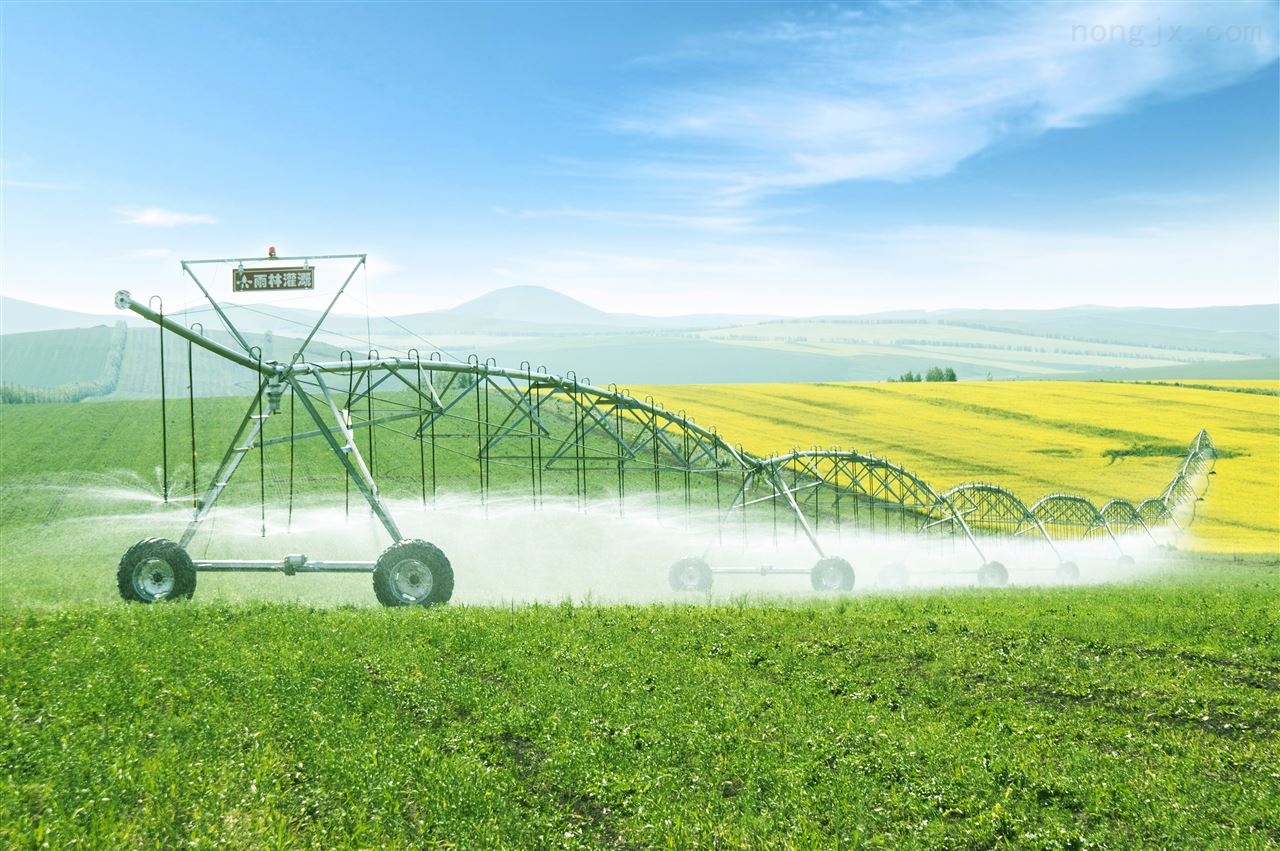
In modern agricultural production, irrigation sprinklers serve as the core equipment for efficient water-saving agriculture. With their precise irrigation and intelligent control capabilities, they have become the “main force” in guaranteeing food security and increasing agricultural efficiency. However, inside the high-speed “heart” of these sprinklers, there is a component that appears inconspicuous but plays a decisive role— oil seals
I. Sprinkler Oil Seals: The “Sealing Guardians” of Agricultural Machinery
As a piece of large-scale agricultural equipment integrating mechanics, hydraulics, and automation, the core components of a sprinkler—such as the power transmission system, hydraulic control system, and rotating mechanisms—cannot function without the sealing protection of oil seals. Simply put, an oil seal is a precision component used to prevent lubricant leakage and stop external impurities (such as dust, mud, and crop debris) from invading the interior of the machinery. In the working environment of a sprinkler, the performance of the oil seal is directly related to the stability, lifespan, and even the efficiency of agricultural production of the equipment.
1. The Three Core Roles of Sprinkler Oil Seals
- Leakage Prevention and Pressure Maintenance: The hydraulic systems and gearboxes of sprinklers require lubricating or hydraulic oil for continuous lubrication, cooling, and power transmission. The oil seal creates a “dynamic sealing barrier” through the tight contact between the lip and the rotating shaft, ensuring that the oil does not leak and maintaining stable system pressure. This avoids component wear or even seizure caused by oil shortage.
- Dust and Contamination Prevention: The agricultural working environment is complex; sprinklers are often exposed to dust, mud, and pesticide residues. Inferior oil seals can easily allow impurities to invade precision parts like bearings and gears, accelerating wear and triggering failures. The dust lip design of high-quality oil seals effectively blocks external contaminants, extending equipment maintenance cycles.
- Energy Conservation and Consumption Reduction: Oil leakage not only wastes resources but can also cause environmental pollution. High-performance oil seals reduce leakage, lower lubricant consumption, and avoid energy loss caused by increased friction, meeting the development needs of modern agriculture for “green and high efficiency.”
2. The Operational Challenges of Sprinkler Oil Seals
Compared with traditional industrial equipment, the working environment of sprinkler oil seals is harsher, facing multiple challenges:
- High-Load Continuous Operation: During irrigation seasons, sprinklers often need to run for long periods under high load. The continuous friction between the oil seal lip and the shaft places extremely high demands on the material’s wear resistance and heat resistance.
- Adaptability to Harsh Environments: Sprinklers in the field are exposed to high temperatures, high humidity, and UV radiation. Corrosive substances like chemical fertilizers and pesticides can cause the oil seal material to age or harden, losing its sealing performance.
- Complex Movement Trajectories: Some rotating mechanisms or telescopic arms of sprinklers involve swinging or reciprocating motion. This requires the oil seal to not only handle rotary sealing but also cope with complex conditions such as eccentricity and vibration.
- Low Maintenance Requirements: Agricultural equipment operates in scattered locations, and maintenance costs are high. Therefore, oil seals need to possess a long lifespan and high reliability to reduce downtime and repair frequency.
II. Technological Innovation: Shangyu Oil Seal Solves Sprinkler Sealing Problems
As an enterprise focused on R&D and manufacturing of oil seals for over 30 years, Shangyu Oil Seal understands the technical pain points of sprinkler oil seals deeply. Relying on a provincial-level R&D center, the company has created high-performance oil seal products suitable for various sprinkler models through material innovation, structural optimization, and process upgrades, becoming a core supplier for many domestic and foreign agricultural machinery leaders.
1. Material Innovation: A Breakthrough from “General-Purpose” to “Specialized”
Traditional oil seals mostly use Nitrile Butadiene Rubber (NBR). While it has good oil resistance, it has limitations in high-temperature resistance, corrosion resistance, and aging resistance. Shangyu Oil Seal has developed multiple specialized material systems specifically for sprinkler conditions:
- Fluoroelastomer (FKM) Oil Seals: With a temperature range of -20℃ to +200℃, they have excellent corrosion resistance against pesticides and fertilizers. They are suitable for hydraulic systems and high-temperature gearboxes of sprinklers.
- Hydrogenated Nitrile Butadiene Rubber (HNBR) Oil Seals: Modified by hydrogenation based on NBR, the tensile strength is increased by 30%, and wear resistance is improved by 40%. They are especially suitable for high-load, high-speed transmission shaft sealing.
- Ethylene Propylene Diene Monomer (EPDM) Oil Seals: Optimized for water and steam resistance, they can be used for dust and waterproof sealing of exposed sprinkler parts, preventing rainwater and irrigation water from intruding.
In addition, by adding nano-fillers (such as nano-silica and carbon nanotubes), the company has further improved the anti-fatigue performance and lifespan of the rubber materials. Experimental data shows that the optimized oil seals have a lifespan increased by more than 2 times under simulated field conditions.
2. Structural Optimization: From “Single Sealing” to “Multiple Protections”
Shangyu Oil Seal has introduced the concept of “multiple protections” in oil seal structural design, improving sealing reliability by optimizing lip geometry and integrating auxiliary sealing elements:
- Double Lip Design: The primary lip is responsible for sealing the fluid, while the secondary lip (dust lip) blocks the intrusion of impurities. A “grease lubrication cavity” is formed between the two, reducing direct friction between the lip and the shaft, thereby lowering wear.
- Hydrodynamic Lip: Through CFD (Computational Fluid Dynamics) simulation, the lip contact angle and pumping effect are optimized. During rotation, the oil attempting to leak out is “pumped back” into the sealing chamber, achieving the goal of “zero leakage.”
- Metal Skeleton Reinforcement: Using stainless steel or carbon steel skeletons that are tightly combined with rubber through the vulcanization process enhances the structural strength and pressure resistance of the oil seal, preventing deformation and failure under high-pressure and vibrating conditions.
3. Precision Manufacturing: A Leap from “Millimeter Level” to “Micron Level”
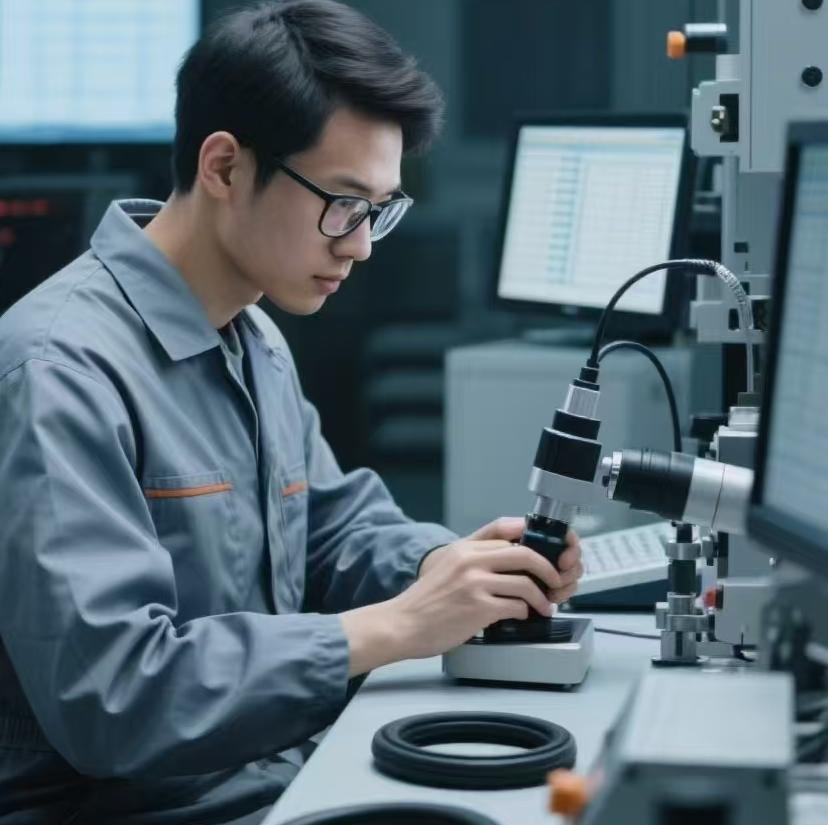
The performance of an oil seal depends not only on materials and structure but even more so on the precision of the manufacturing process. Shangyu Oil Seal has introduced imported fully automatic vulcanization production lines from Germany, high-precision CNC grinders, and coordinate measuring machines (CMM), realizing full-process precision control from mold development to finished product testing:
- Mold Precision Reaches 0.005mm: Ensures the consistency of oil seal lip dimensions, avoiding sealing failure caused by mold errors.
- 100% Air Tightness Testing: Using helium mass spectrometry leak detectors, every finished product undergoes air tightness testing. The leakage rate is controlled below 10⁻⁶ Pa·m³/s, far exceeding industry standards.
- Shaft Sleeve Adaptability Optimization: Providing customized oil seal solutions for different sprinkler shaft materials (steel, aluminum), surface roughness, and hardness, ensuring the optimal fit between the lip and the shaft.
III. Practical Cases: Shangyu Oil Seal Assists Efficient Agriculture
Over the years, Shangyu Oil Seal’s products have been widely applied in domestic and foreign mainstream sprinkler brands, such as center pivot sprinklers in Xinjiang cotton fields, hose-fed travelers (lateral move systems) in Northeast grain main production areas, and water-saving irrigation equipment exported to Southeast Asia and Africa. They have won customer trust with stable performance
.
Case 1: Seal Renovation for Large Center Pivot Sprinklers in dometic and export market
Ten center pivot sprinklers belonging to an agricultural cooperative in Xinjiang suffered from frequent leakage due to aging original factory oil seals, resulting in insufficient hydraulic system pressure and a 30% drop in irrigation efficiency. After an on-site survey, Shangyu Oil Seal’s technical team customized HNBR material double-lip oil seals for them and optimized the lip contact pressure. After renovation, the sprinklers ran for 2,000 hours continuously without leakage, and the stability of the hydraulic system improved, saving over 200,000 RMB in maintenance costs annually.
Case 2: Weather Resistance Upgrade for Sprinklers Exported to Africa
Targeting the hot climate and strong UV radiation in Africa, Shangyu Oil Seal developed weather-resistant FKM oil seals for a agricultural machinery enterprise’s exported sprinklers. By adding UV inhibitors and heat stabilizers, the oil seals can work continuously without aging or hardening in high-temperature environments up to +50℃. The product passed a 2,000-hour accelerated aging test, with customer feedback stating that “the failure rate was reduced by 60%, and after-sales service costs were significantly reduced.”
IV. Industry Outlook: Oil Seal Technology Developing Towards “Intelligence and Green-ness”
With the deepening of agricultural mechanization and intelligence, sprinklers are developing towards large-scale, precise, and unmanned directions. This places higher demands on oil seal technology. Shangyu Oil Seal keenly grasps industry trends and has already deployed in three major R&D directions:
- Smart Monitoring Oil Seals: Integrating sensor technology to monitor parameters such as lip temperature and wear amount in real-time. Warning information is sent to users via IoT devices, enabling “predictive maintenance.”
- Bio-based Material Oil Seals: Developing bio-based materials using natural rubber and soybean oil as raw materials to reduce oil dependence and carbon footprint, responding to the agricultural “Dual Carbon” goals.
- Oil-Free Lubrication Seals: Achieving sealing under oil-free or low-oil conditions through self-lubricating materials (such as PTFE, PEEK) and surface texture design. This applies to scenarios in water-saving irrigation where zero pollution from fluid is strictly required.
V. PQK Oil Seal: Building a Brand with Quality, Driving the Future with Innovation
As a National High-tech Enterprise and a Zhejiang Provincial “Specialized, Refined, Distinctive, and Innovative” (SRDI) SME, Shangyu Oil Seal has always upheld the corporate mission of “Sealing every drop of trust, guarding every operation.” The company has passed the ISO/TS 16949 quality management system certification. Its products cover eight major fields, including agricultural machinery, construction machinery, automobiles, and aviation. It holds over 30 patents and has an annual production capacity of over 90 million pieces.
Today, as agricultural modernization accelerates, Shangyu Oil Seal will continue to focus on the technical pain points of agricultural machinery sealing. Guided by customer needs and driven by technological innovation, we will provide more reliable and environmentally friendly sealing solutions for sprinklers and other agricultural equipment.(tractor,lawnmower,mining machinery ,harvester)We are determined to assist China in moving from a “major agricultural country” to a “strong agricultural power.”
【Conclusion】
From the sprinklers in the fields to the smart irrigation systems of large farms, the small oil seal bears the “great responsibility” of ensuring food security. Shangyu Oil Seal will polish every product with the “craftsman spirit,” making “Shangyu Intelligent Manufacturing” a quality benchmark in the field of agricultural machinery sealing. Walking hand in hand with agricultural mechanization to build the dream of harvest together!

